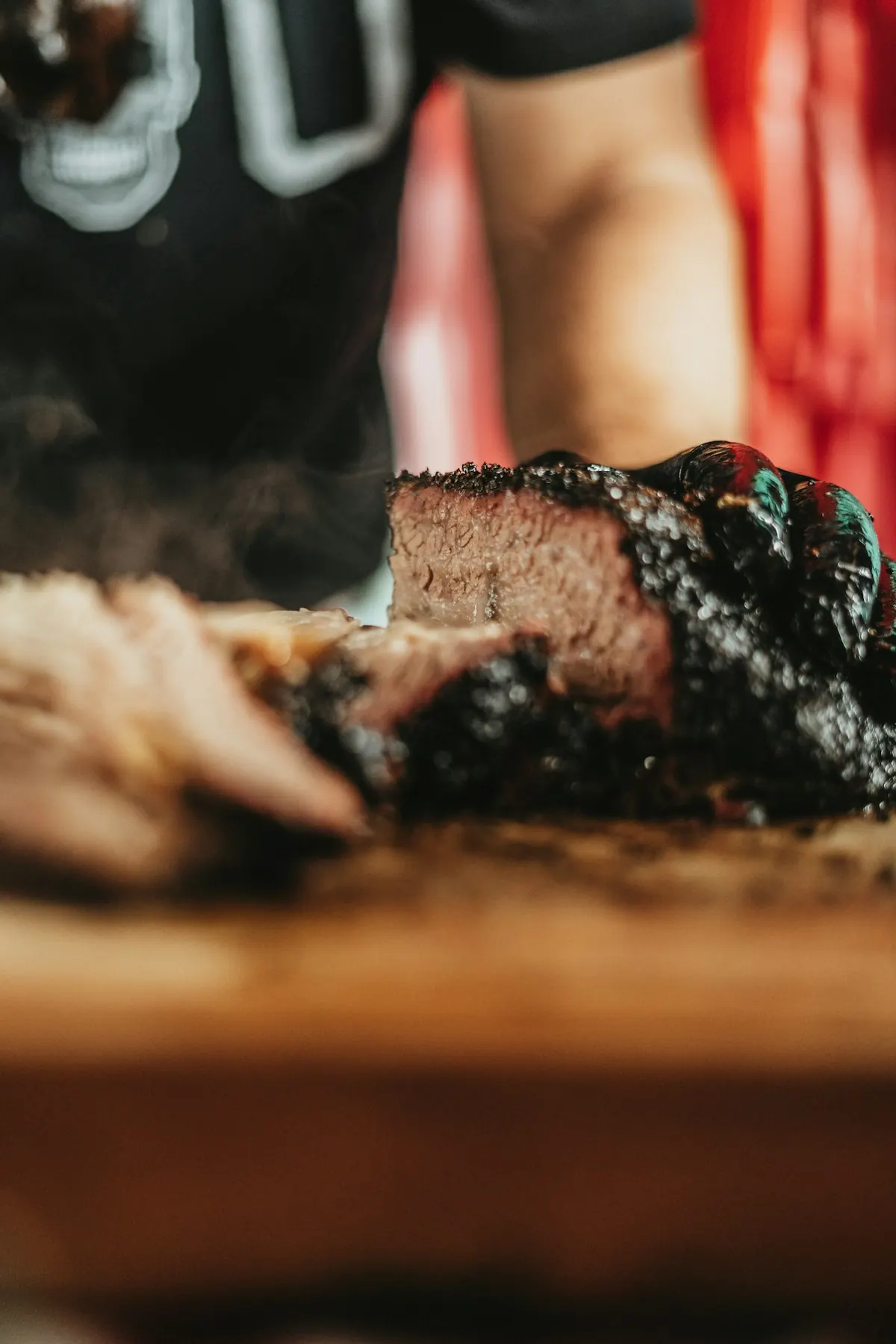
Buy the Right Brisket
Get a whole packer (point and flat together), 10–14 lb (4.5–6.5 kg). It's more forgiving than a flat on its own because the fatty point protects it. Choose one that bends when you hold it in the middle — a floppy brisket has less hard fat and more marbling.
What the Stall Is (and Why Not to Panic)
Somewhere around 65–75°C / 150–165°F, the internal temperature stops rising for hours. Moisture evaporating from the surface cools the meat. Wrapping in butcher paper or foil gets you through it faster. If you have time, you can also just wait.
How to Tell It's Done
Temperature gets you close; feel finishes the job. Start probing at 90°C / 195°F. When a probe slides into the flat like it's going into soft butter, with no resistance, it's done. That's usually between 93°C and 96°C (200–205°F).
Rest Longer Than You Think
A rested brisket is juicier and easier to slice. One hour is the minimum. Wrapped in a towel inside a dry cooler, it stays hot for 4+ hours, so finishing early is never a problem. Finishing late is.
Plan Your Brisket Cook
Answer a few quick questions and get a full step-by-step plan.
Frequently Asked Questions
How long does it take to smoke a brisket?
About 1 hour per pound at 250°F (121°C), 1¼ hours per pound at 225°F (107°C), plus at least 1 hour of resting. A 12 lb brisket takes roughly 12–15 hours in total.
What temperature should brisket be when it's done?
Around 93–96°C (200–205°F), but go by feel: it's done when a probe slides in with almost no resistance.
Should I wrap brisket in foil or butcher paper?
Butcher paper keeps the bark firmer; foil is faster but softens the bark. Either gets you through the stall.
Related Guides
How Much Brisket Do You Need for 10 People?
Planning a brisket cook for a group? The general rule is about 1/2 pound (225g) of cooked brisket per person. But raw brisket loses 40-50% of its weight during cooking. Here's how to get the math right — and plan the perfect cook.
Texas Brisket, Central Texas Style
In the barbecue towns around Austin and Lockhart, brisket is about restraint: beef, salt, pepper, oak smoke and time. No sauce on the meat, no sugar in the rub. Here's how to cook it that way at home.
Best Side Dishes for Brisket
Great brisket deserves great sides. The best pairings balance the rich, smoky meat with fresh, tangy, or creamy accompaniments. Here are the classics that never fail — with timing tips to have everything ready together.