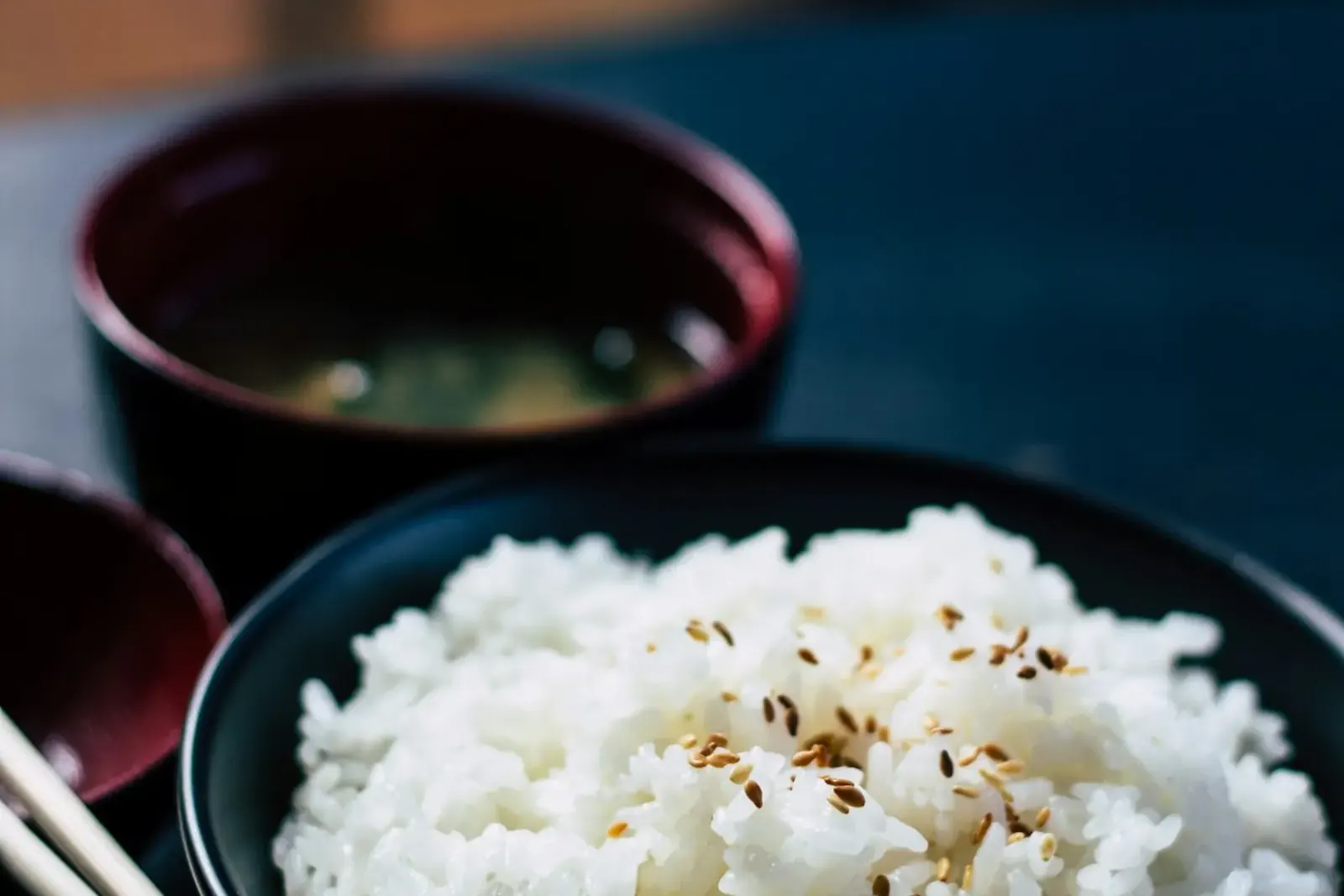
Use Short-Grain Rice
Japanese rice is a short-grain japonica variety; look for "Japanese rice" or "sushi rice" on the bag. Long-grain rice like basmati behaves very differently and won't work with these water amounts.
Why Rinse
Rinsing removes loose surface starch. Without it the rice turns gluey. Wash it gently with your fingertips; the grains break easily. Stop when the water runs almost clear.
Why Soak
Soaking lets water reach the centre of every grain before it cooks, so the inside is tender while the outside doesn't go mushy. 30 minutes is enough in summer; give it a bit longer in winter.
The Rice-Cooker Cup
Japanese recipes measure rice in gō, the cup that comes with a rice cooker: 180 ml, about 150 g of raw rice. It makes roughly two small bowls of cooked rice.
Plan Your Dinner
Answer a few quick questions and get a full step-by-step plan.
Frequently Asked Questions
What is the water ratio for Japanese rice?
About 1.1–1.2 times the volume of rice: for one 180 ml rice-cooker cup, use roughly 200–215 ml of water.
Do you have to rinse Japanese rice?
Yes. Rinsing removes surface starch that would otherwise make the rice gummy.
How long should Japanese rice soak?
About 30 minutes, a little longer in cold weather.
Related Guides
How Italians Cook Pasta (The 1-10-100 Rule)
Italian home cooks follow a few simple rules for pasta: plenty of water, properly salted, al dente, and married to the sauce in the pan. That last step is the one most people skip.
Perfect Salmon Temperature: Grill, Oven & Smoker Guide
Salmon is one of the most forgiving proteins — but getting the temperature right is the difference between silky and dry. Here's your complete guide to salmon doneness across every cooking method.
How to Grill Chicken Thighs (Crispy Skin, Juicy Meat)
Thighs are the most forgiving cut of chicken you can put on a grill. Unlike breasts, they get better as you cook them past the safe temperature, so juicy, crisp-skinned chicken is easy.